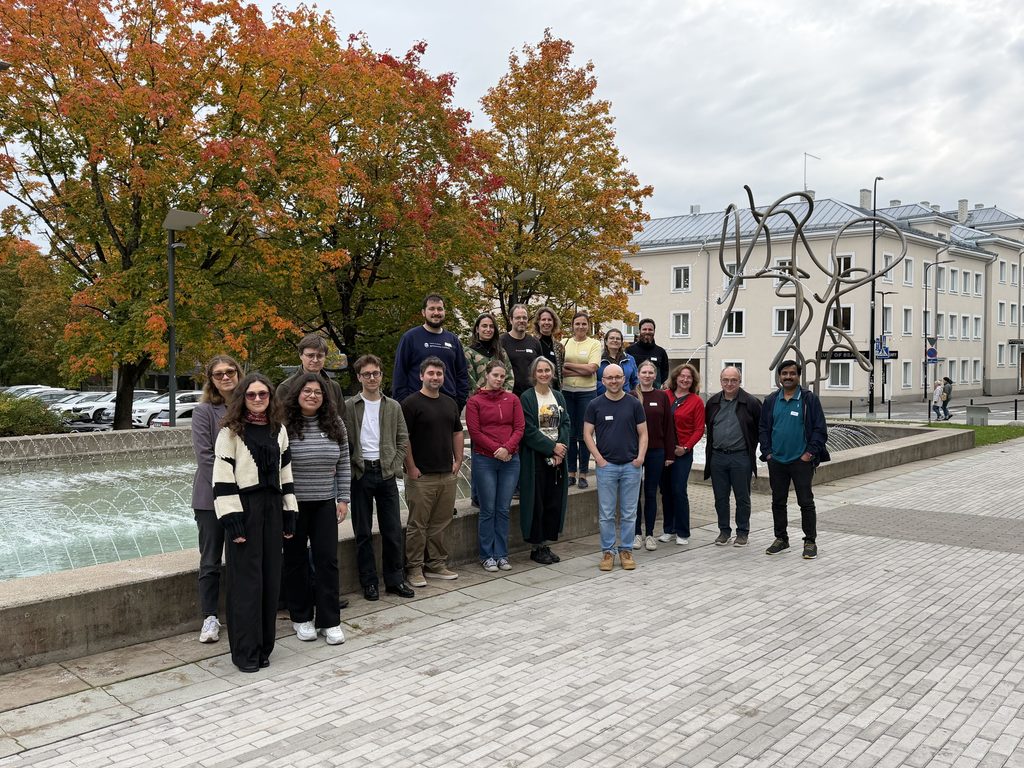
The international project ECHO – „Expanding Concept and Methodology for Human Past Studies in the Eastern Baltics Countries“ (under the Horizon Europe Twinning programme) has been running in the Baltic countries since 2024 and is coordinated by the University of Tartu. The project involves the University of Latvia, the Catholic University of Leuven, the University of Copenhagen and Vilnius University (VU).
At the halfway point of the project, a team of scientists from the Centre for Human Bioarchaeology and Paleogenetics of the Translational Health Research Institute (THRI) of the Faculty of Medicine (MF) of the University of Vilnius – Indrė Krastinaitė, Dr Justina Kozakaitė and Assoc. Prof. Dr Ingrida Domarkienė – together with their supervisor Prof. Dr Rimantas Jankauskas have already managed to achieve the first scientific research results and acquire many valuable skills in the field of human past research and its management.
In addition to administrative, dissemination activities and participation in the opening hybrid conference in Estonia (Laulasmaa), VU MF scientists involved in the project traveled twice to the Archeogenomics Laboratory of the Genomics Institute of the University of Tartu, where they became familiar with the specifics of the work and the laboratory protocols and bioinformatic data analysis carried out by the group. 14 Iron Age samples were brought from Lithuania for the pilot study and their laboratory analysis was performed. It was determined that the DNA samples are of excellent quality, Y chromosome and mitochondrial haplogroups were determined, and the degree of biological kinship between the samples was assessed. Good laboratory practice was implemented and the research analysis algorithm was adapted in the laboratories of the VU THRI Center for Human Bioarchaeology and Paleogenetics.
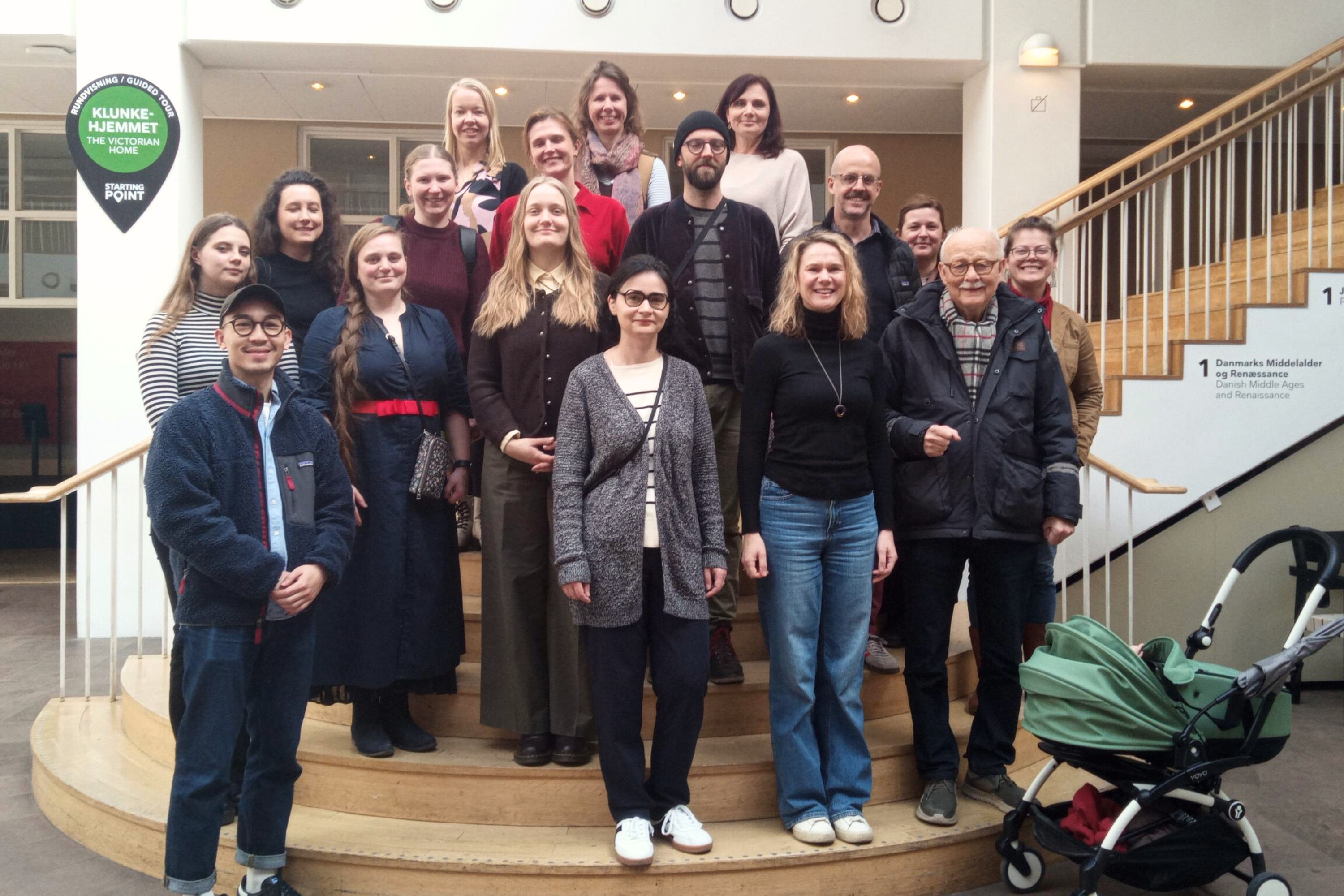 After training at the University of Copenhagen, preparing for a tour of the museum’s rich collection / Photo from personal archive.
They also visited partners at the University of Copenhagen, where a workshop „International Interdisciplinary Science“ was held. The project participants delivered presentations and actively discussed what interdisciplinary science should be like in studying the past, and how it should be developed at the international level: by communicating, sharing data, adhering to common principles for preparing publications and work ethics. This prompted the inventory of the data of the human remains assemblage accumulated by the VU MF and the database update work. Also, the development of an ancient DNA biobase was started at the VU MF THRI. The leadership of the project partners from the University of Copenhagen was important for the ideas of the database architecture. Training, organized at the Genomics Institute of the University of Tartu, was useful and helped to familiarize themselves with the international interdisciplinary database of ancient samples „BIAD“. An important inter-institutional memorandum was signed for the submission of data and the possibility of using the data of other scientists already in this database.
One of the team members of the laboratory of the Human Bioarchaeology and Paleogenetics Center of the VU MF THRI, who also works in the ECHO project – Indrė Krastinaitė – went to do an internship and work in the Archeogenomics Laboratory of the Genomics Institute of the University of Tartu. She conducted laboratory analysis of DNA from 56 additional Iron Age individuals for the project’s scientific research. In total, more than 270 samples are planned for analysis.
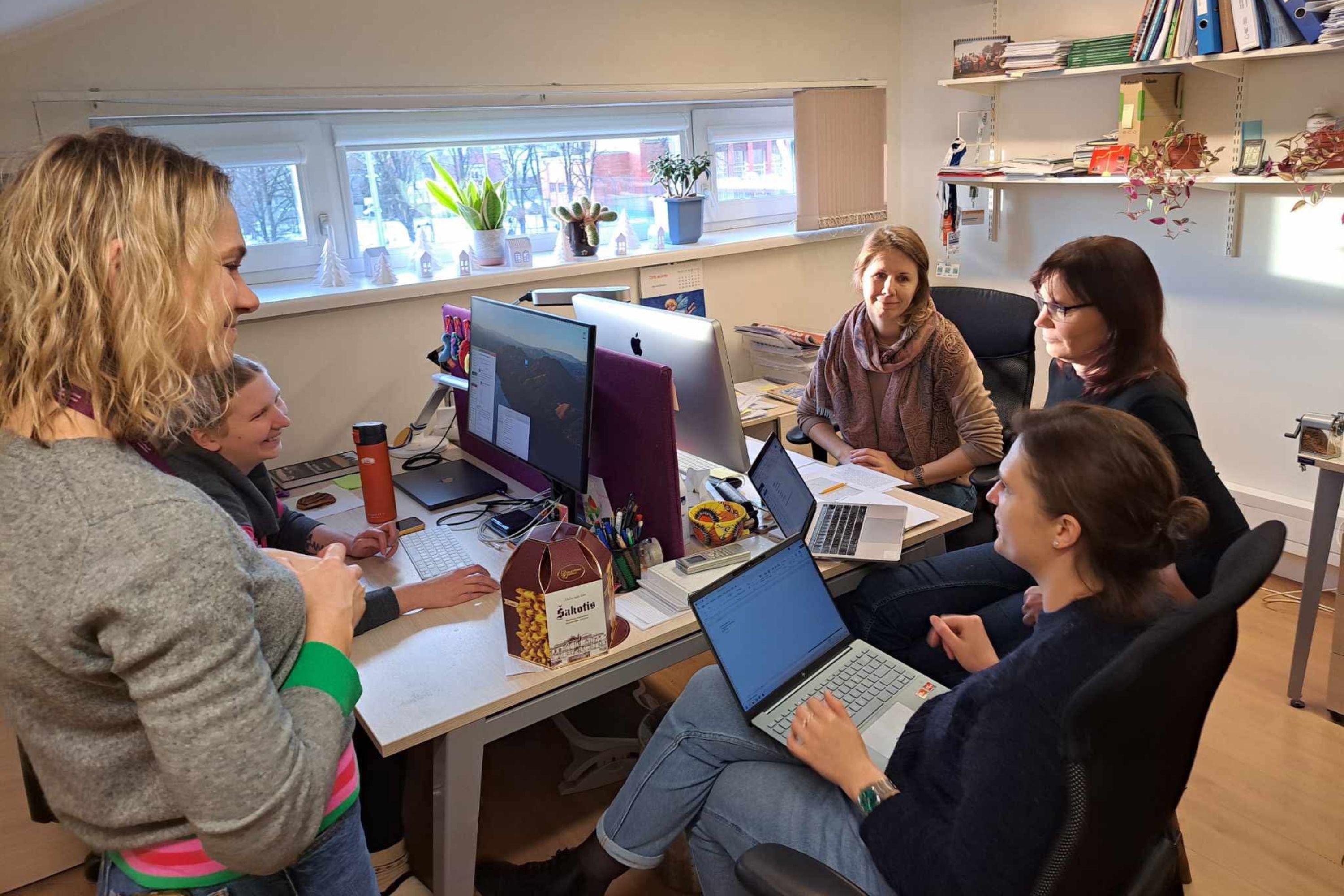 Discussions are underway with colleagues from the Archeogenomics group regarding the further strategy for studying the samples (from left: Assoc. Prof. Dr Ingrida Domarkienė, Dr Lehti Saag, Dr Alena Kushniarevich, Prof. Dr Kristiina Tambets, Dr Justina Kozakaitė) / Photo from personal archive.
The ECHO project aims to promote research into the human past in the eastern Baltic region by creating a network of researchers in the humanities and natural sciences in the Baltics, sharing experiences and acquiring new competencies. The activities are complemented by a scientific study to analyze the ancient human connections of Estonia, Latvia and Lithuania.